Texas Energy Crisis a Warning for Michigan
New generation facilities should be reliable
Original Article By Jason Hayes
https://www.mackinac.org/texas-energy-crisis-a-warning-for-michigan
Editor’s Note: New details about the Texas electricity grid are emerging. The failures and rolling blackouts trace back to three main issues. First, ERCOT — the operator of Texas’s grid — planned poorly and responded too slowly. Second, officials chose not to winterize key generation equipment, even after similar outages in 2011. Third, extreme cold affected all types of energy generation: wind, solar, nuclear, coal, and natural gas.
This information may change the short-term reporting on the crisis, but it does not alter the long-term reality. For more than a decade, Texas regulators have built a system that favors new renewable projects over maintaining or adding more dependable power sources.
Even defenders of wind admit that it is “reliably unreliable.” ERCOT did not expect wind to work in freezing conditions. The same happened in the Midwest during the January 2019 Polar Vortex event when wind output collapsed in the extreme cold.
“Reliably unreliable” may work in mathematical models or when it’s sunny and 75°, but it is potentially dangerous when the real world gives us cloudy and -20°.
It’s also a poor argument in favor of the drive to build more renewables. Spending billions to build energy sources that cannot be depended on when people need them most is irresponsible.
Michigan’s utilities are heading down the same road as Texas. They speak of building a “diverse” system, yet their plans remove coal and reduce nuclear while putting nearly all investment into wind, solar, and natural gas. As renewable advocates themselves admit, wind and solar can’t be counted on in extreme weather. That leaves Michigan’s grid leaning heavily on natural gas. The 2019 Ray Compressor Station fire proved that this is not a reliable plan.
For the sake of Michigan residents, utilities must refocus on safe, dependable generation.
The following letter went to Senator Dan Lauwers, Chair of the Senate Energy and Technology Committee, and Representative Joe Bellino, Chair of the House Energy Committee. You can view the original letter here.
Dear Chairmen Lauwers and Bellino,
The news coming out of the state of Texas this week should remind every Michigan resident of our own recent experience with the failure of renewable energy to provide sufficient energy to meet the state’s needs.
As you recall, the January 2019 “Polar Vortex” event led Gov. Whitmer and utilities across the state to ask Michigan residents to reduce their home thermostat levels to 65° or lower. State leaders told residents that failing to cut energy use would put the system at risk.
During the 2019 Polar Vortex, rapidly rising customer demand strained Michigan’s energy systems as extreme cold set in. At the same time, a significant natural gas supply failed spectacularly, and wind and solar delivered only negligible amounts to the grid.
The Midwest was fortunate, at that time, to have a substantial supply of nuclear and coal, which provided essential energy for heating.
Unfortunately for its residents, Texas is much further along in its transition to an unreliable renewable energy-focused system that relies on just-in-time natural gas backup.
In fact, wind sources overtook coal in Texas for the first time in 2020. In October, natural gas supplied Texans with 52% of their net electricity demand, wind 22%, coal 17%, and nuclear just over 8%.
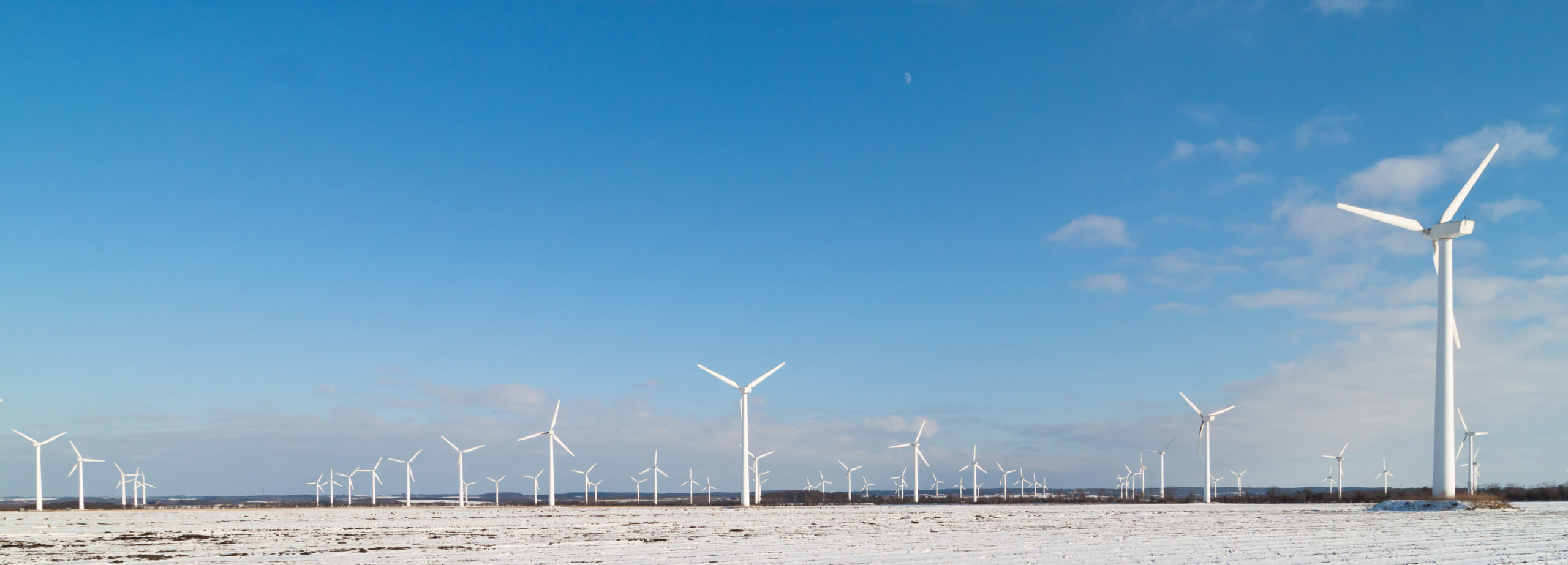
Winter cold is shutting down over half of the wind generation capacity in Texas and literally freezing natural gas pipelines. The state’s electricity regulator — ERCOT — has imposed “rolling” blackouts.
The Southwest Power Pool in Oklahoma, Missouri, and Kansas is implementing similar measures. Friends and acquaintances living in the state of Texas are reporting that temperatures in their homes have dropped below 50°, and exposed pipes are freezing.
This is the same sort of situation we experienced during the 2019 Polar Vortex. It is also the same sort of challenge we saw in California last summer, when higher temperatures and nearby wildfires caused increased demands on air conditioning. Solar generation failed, and CAISO, the state’s energy regulator, was forced to impose rolling blackouts as demand outstripped supplies when the sun began to set.
The stories coming out of Texas, Oklahoma, Missouri, Kansas, and California, as well as other areas that rely heavily on renewable energy, should cause every member of both the Senate and House energy committees to sit up and take notice.
Michigan’s major utilities — Consumers Energy and DTE — have both committed to net-zero CO2 emissions by 2040 and 2050, respectively. Their approved Integrated Resource Plans outline how they will close reliable, affordable facilities, including nuclear, natural gas, and coal plants.
They intend to replace these sources with solar, wind, efficiency programs, and demand response. In practice, demand response often amounts to short-term rolling outages.
We described the extreme costs of these plans in our comments to the MPSC hearing on the DTE IRP (MPSC docket U-20471). But even more important is the fact that we are rapidly moving our electricity system toward the same heavy reliance on renewable energy sources, backed by natural gas, as both Texas and California.
Unfortunately, we are making these energy policy choices at the same time as we plan to impose massive new demands on our electricity system. We are pushing drivers to switch to electric vehicles and are attempting to close reliable energy infrastructure that daily provides more than 330,000 Michigan households with the propane they need to heat their homes and cook their food.
Homeowners will have no choice but to rely on electricity to heat their homes, and drivers will need to plug in their cars to travel. Our 2019 Polar Vortex experience, along with recent events in California, Texas, and the lower Midwest, shows that renewable-heavy grids fail when temperatures swing too high or too low. These policies create a recipe for disaster whenever extreme weather hits.
As we noted in our recently published “2021 Public Policy Recommendations” report,
Public Acts 295 of 2008 and 342 of 2016 mandate that a minimum of 15% of electricity produced by utilities must be sourced from renewable sources, such as wind and solar, by the year 2021. However, as the U.S. Department of Energy has noted, as solar penetration goes beyond 5% in an energy market, the likelihood that it will provide reliable power at peak demand drops off rapidly. Compounding this problem is the fact that solar energy, which is the primary source that both of the state’s large public utilities plan to build for the foreseeable future, has a capacity factor as low as 8% during Michigan’s cloudy and dark winter months.
All of Michigan’s utilities have publicly committed to switching their generation fleets to rely on far more than the mandated 15% renewable requirements. Therefore, the state’s legislators should feel comfortable rescinding the renewable energy standard. They can then adopt a reliable energy standard that requires any new electricity generation source be fully dispatchable. That is, ratepayers can rely on new electricity sources being constructed in the state to be available when they are needed, instead of only when the wind is blowing or the sun is shining.
To protect Michigan residents from the outages Texans and Californians face during extreme weather, we urge the Legislature to require that all new generation facilities meet a basic dispatchability standard before approval.
Sincerely,
Jason Hayes
Director of Environmental Policy