
By Tucker Perkins
Tucker Perkins is president and CEO of the Propane Education and Research Council.
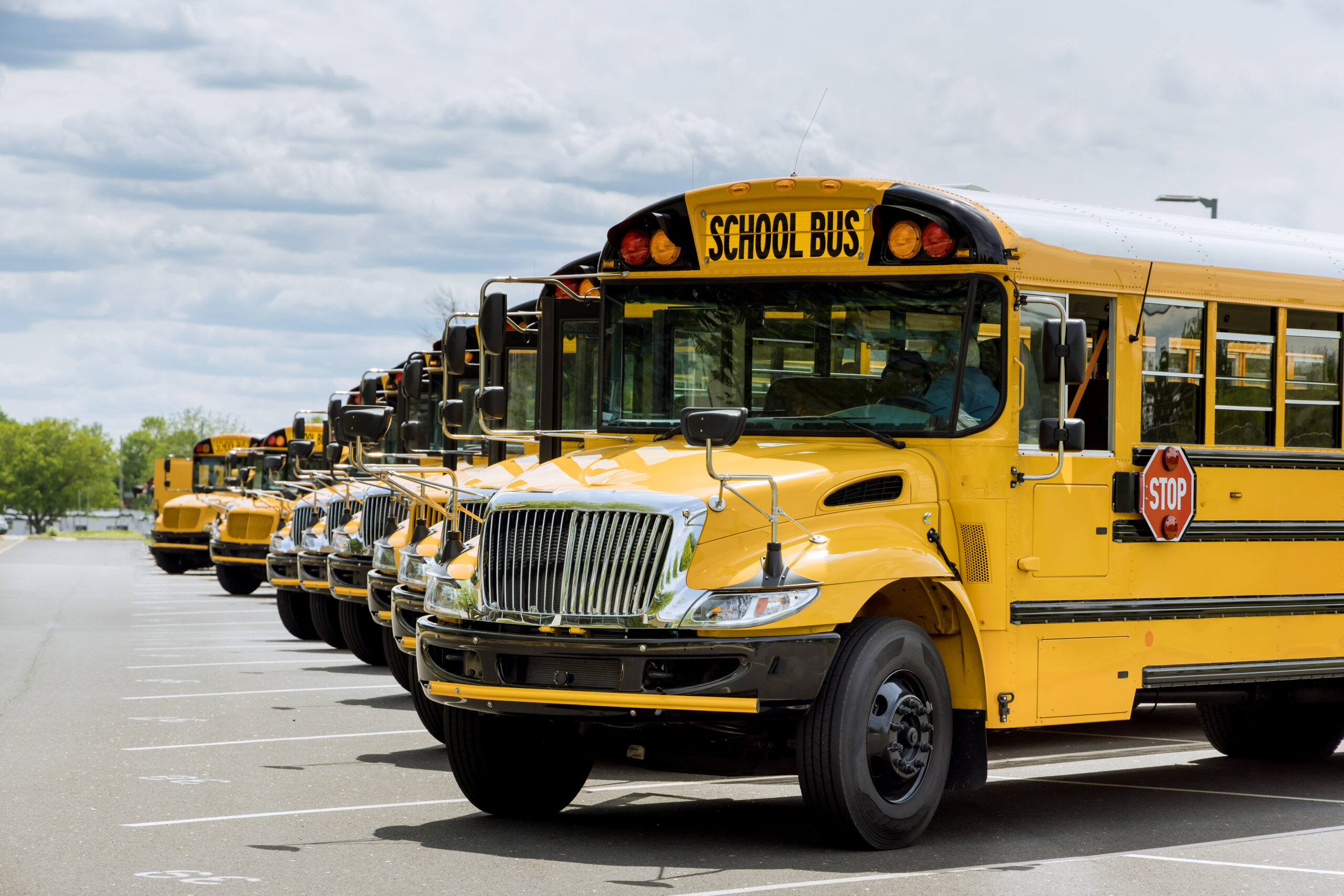
In the coming weeks, the Environmental Protection Agency will announce its selections for clean school bus rebates. The agency plans to award at least $500 million to high-need, low-income public school districts, tribal organizations, and nonprofit providers of school transportation. While a large portion of this funding will likely go toward electric school buses, those vehicles shouldn’t automatically be the default choice. Research indicates that more affordable alternatives can reduce emissions more quickly.
Every year, school buses log over three billion miles, transporting more than 25 million children across the country. These rebates have the potential to significantly improve air quality and accelerate decarbonization by replacing aging diesel-powered buses. EPA’s Clean School Bus Program gives applicants the option to request battery-electric, propane, or compressed natural gas buses.
Eliminating diesel is a worthy goal. It has a high carbon intensity and releases harmful ground-level pollutants when burned. But here’s the surprise: while electrification may help reduce local air pollution, it doesn’t fully solve today’s climate challenges.
The U.S. electric grid isn’t as clean as many assume. Although renewable energy is growing rapidly, fossil fuels still provide a significant portion of the electricity needed during peak demand. As of the last check, the average carbon intensity of the U.S. electric grid was approximately 137 grams of CO2 equivalent per megajoule (g CO2eq/MJ). In comparison, conventional propane has a carbon intensity of 79 g CO2eq/MJ, while renewable propane made from the cover crop camelina has a carbon intensity of only 20 g CO2eq/MJ. Leaving conventional diesel behind is a good move, and it can happen today with a combination of clean energy resources.

Cost Should Be Part of the Equation
Cost matters, too. A battery-electric school bus with charging infrastructure typically costs around $375,000—approximately three times the price of a propane-powered bus. For many districts, especially those in disadvantaged communities, this makes it difficult to upgrade more than a few vehicles. Propane, on the other hand, enables fleets to replace three times as many buses, resulting in significantly reduced CO₂ emissions and a sharp decrease in NOₓ, SOₓ, and particulate emissions.
We’re realizing quickly that vehicle electrification is a complex process. The environmental benefits are not as obvious as once thought, and the grid is simply not ready to service the load. Fleet electrification is even more complex. The journalist H.L. Mencken once said, “For every complex problem, there’s a solution that is simple, neat, and wrong.”
According to the U.S. Energy Information Administration, approximately 60% of U.S. electricity still comes from fossil fuels. The cleanliness of the grid varies by state, so it’s essential to understand how electricity is generated regionally.
While we’re seeing significant investments in renewable energy, the energy transition is not happening at a fast enough pace to keep up with load growth. Transmission infrastructure delays and permitting requirements are two significant challenges that must be addressed to accelerate the decarbonization of the grid. Grid operators, such as PJM, have expressed concerns about reliably meeting demand due to the intermittent nature of renewables and the planned retirement of older, less efficient power plants.
It’s not wrong to try to eliminate things like diesel fuel because clean, affordable alternatives are available today. This is the wide path ahead — utilizing a variety of ever-improving technologies to address virtually every possible energy-intensive challenge. We applaud the EPA’s Clean School Bus Program and hope to see the agency’s awards adopt a holistic approach.